In Odisha, we say “Bāra māse tera parba”. In simpler words, we have twelve months and thirteen festivals in Odisha.
Sometimes, I think even that is an understatement. One festival ends and before we have put everything away, another seems to be waiting around the corner. And honestly, I am not complaining.
Growing up in Odisha, festivals were simply part of life. There was always something to prepare for. I remember being around Maa and Bapa as they cleaned the house, shopped for ingredients, made rangoli, kneaded dough for puris and prepared food to share with people in the neighbourhood. I would help wherever I could, probably getting in the way as often as I was being useful. Nobody called it learning about culture. Nobody sat me down to explain the significance of these activities. I was simply doing what everyone else was doing, waiting for the celebrations to begin.
Only much later did I realise how much I had learnt from those ordinary moments.
Now, as I watch Penguin grow up, I find myself wondering what he will remember about the festivals we celebrate together. Will it be the stories we read, the places we visit, the food we eat or the excitement of preparing for a special day? I don’t really know.
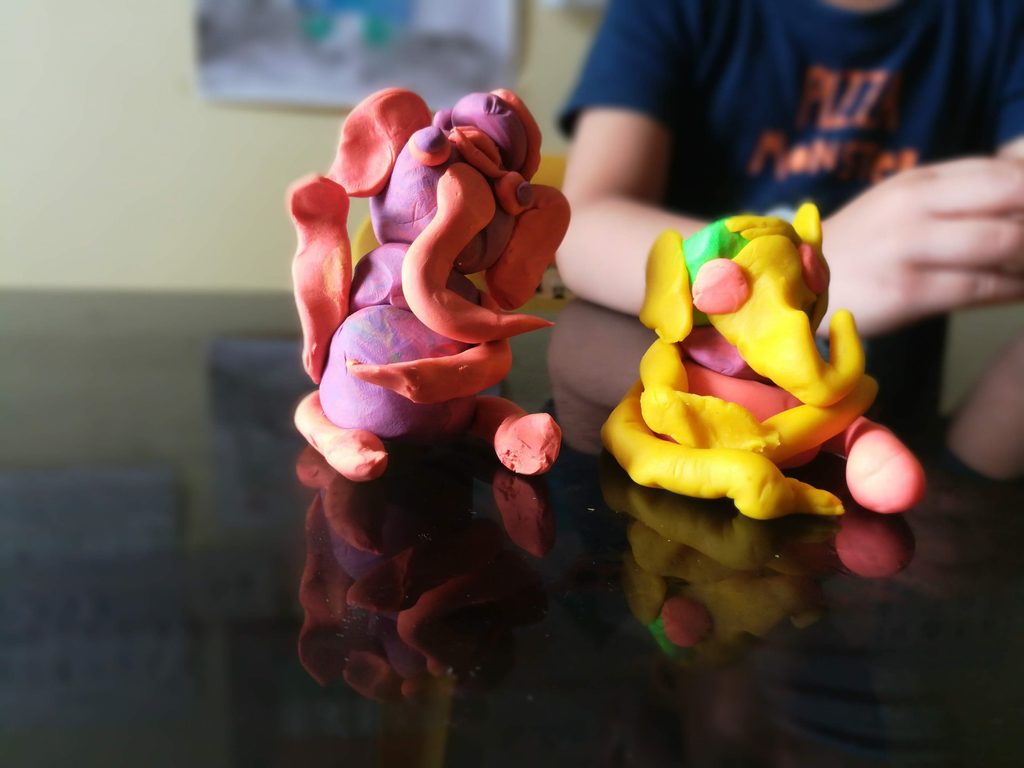
But I have begun to understand that teaching children about Indian festivals rarely happens through explanations alone. Sometimes, it happens while making a mess in the kitchen, listening to a grandparent’s story or trying to understand why a particular day feels different from an ordinary one.
And sometimes, it happens without us realising it.
Growing up, I knew festivals through the sights, sounds, smells and routines around me. There were familiar foods, familiar rituals and the anticipation of doing things we did only at a particular time of the year. It was only after moving away that I began to notice how much our surroundings shaped the way we celebrated. A festival was no longer just a date on the calendar. It became a way of recognising home in a place that was otherwise unfamiliar.
Living abroad made me particularly aware of this. Perhaps Indians living away from home celebrate festivals with a special kind of sincerity because they miss the places they grew up in. Perhaps it is the effort involved in recreating something familiar when everything around you is different. Whatever the reason, we wanted our children to experience these celebrations, even when we couldn’t recreate every detail of the festivals we remembered.
We may leave behind a neighbourhood, a familiar temple and the people who celebrated beside us. But we carry those memories with us. And when we have children, we begin creating new ones.
With Penguin, our celebrations have gradually become a mixture of reading, storytelling, crafts and little explorations around us. Sometimes, these activities happen in the weeks leading up to a festival. At other times, a question comes up, and we decide to look for an answer.
The Ramayana, for instance, usually enters our conversations around Ram Navami and stays with us until Diwali. We read familiar episodes, revisit the characters and talk about their choices. It is lovely to return to the same story and discover that a child may have a completely different question this year from the one he asked last year.
Around Shivratri, we talk about Shiva and Parvati. Sital Sasthi and Rukuna Rath Yatra give us opportunities to explore the traditions around us. Living in Odisha has also allowed us to visit places that bring some of these stories to life.
One image that has stayed with me is that of Durga as Mahishasuramardini at Tinimundia Temple and Vaital Deula in Bhubaneswar. There is something powerful about seeing a familiar story represented in stone. It makes you pause and look more closely than you might when reading the same story in a book.
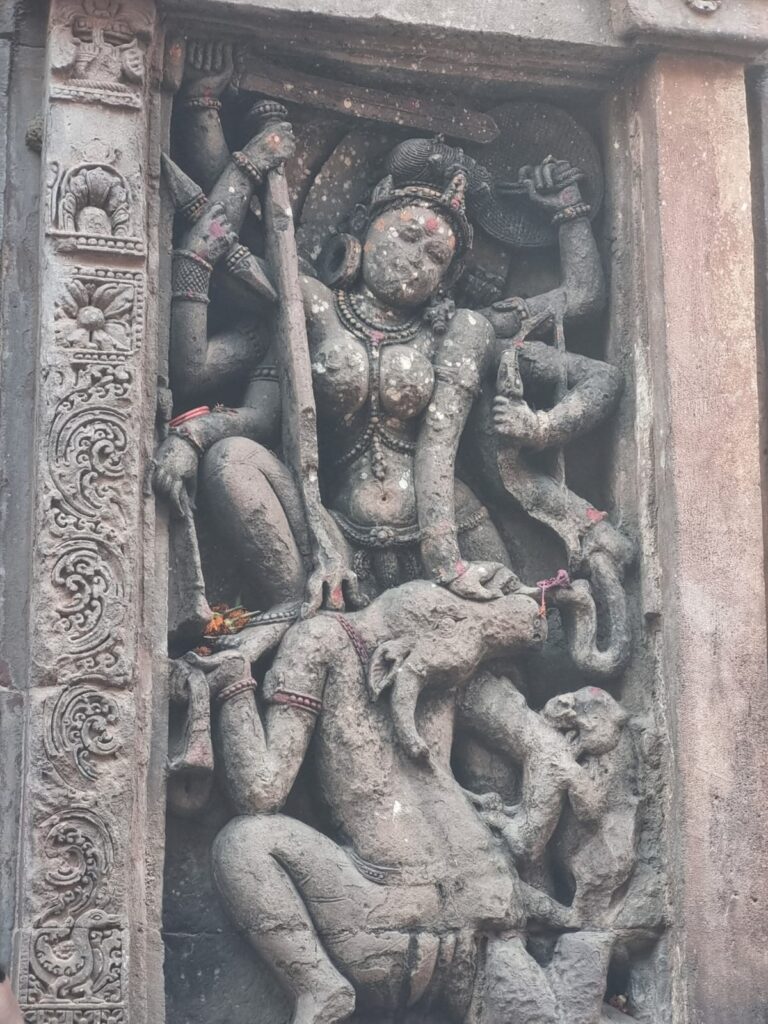
Our visits to museums have led to conversations about idols, sculptures, the people who made them and the stories they were meant to tell. We discovered Lakulisha and visited the Chausath Yogini Temple at Hirapur.
I am not sure how much Penguin will remember of these visits. He may remember a sculpture, a question he asked or something funny that happened along the way. But these experiences have become part of how we spend time together.
And I find myself learning along with him. Growing up with a culture, I am discovering, doesn’t mean you know everything about it.
I often wonder what festivals look like through Penguin’s eyes. I have my childhood memories, but he is building his own. For him, Diwali is about making rangoli, cleaning the house, Lakshmi Puja and playing crackers with friends. Perhaps he will remember the excitement of getting ready, the colours on the floor or a particular Diwali when the rangoli turned out especially well. Perhaps he will remember one when nothing went according to plan. Who knows which little detail will stay with him?
Holi is an entirely different adventure. There are teams to form, strengths and weaknesses to figure out, buckets to snatch, hiding places to find and plans to make for attacking the other team with colours. Last year, Penguin even made a brain map on paper and worked out a coded route map. I found it amusing to watch him approach the festival this way. While I might think of Holi through its colours, food and the people we meet, he was busy planning his next move.
His memories of these celebrations are already different from mine. And perhaps that is how it should be.
I don’t want every festival to become a lesson he must remember or a list of traditions he must follow correctly. I would rather he have enough experiences to form his own memories, ask his own questions and find his own reasons to look forward to celebrating. We create the moments, but we don’t get to decide which ones become memories.
It is only recently that I have begun to appreciate how much more there is to our family celebrations than the things I remember from my own childhood. When I think about festivals, I often think about what I did with Maa and Bapa. Now, as Penguin grows older, I find myself listening to their stories with a different kind of curiosity. Maa, for instance, remembers looking for the Tiha bird or Indian Roller after Nuakhai.
It is such a simple detail, but it opens a little window into a world I didn’t experience in quite the same way. Nuakhai is not only about the food, the rituals or the day of celebration. It sits within a larger landscape of memories, seasons, nature and the things people once looked forward to doing.
I might have grown up around the same festival, but I had never thought about it through that particular memory of hers.
Then there is Bapa, who remembers cleaning the goshala with the helpers when he was a child. When he talks about it, I find myself imagining the work, the people who were part of the household and the preparations that made up everyday life around a celebration. It is a glimpse of a childhood that belongs to him, even though it is connected to a world I recognise.
These are not the stories we usually find when we look up the significance of a festival. They may not appear in books about Indian traditions or in the explanations we give children about why a particular day is celebrated. But they are part of our family’s history. And I am beginning to realise how easily these small stories can disappear if we don’t ask about them. We often assume we know our parents’ lives because we have lived alongside them for so many years. We know the broad outlines of their childhoods, the places they grew up in and the festivals they celebrated. Yet there are so many little details we have never heard.
What did they look forward to as children? What work did they have to do before a festival? Who helped them? What did they eat? What did they find exciting, and what did they find tedious?
Sometimes, we are so busy explaining traditions to children that we forget to ask the older people in our families what those traditions meant to them. We look for the right story, the correct ritual or the historical explanation, while a memory is sitting right there at the dining table, waiting to be heard.
When grandparents share these memories with children, they pass on something more personal than information about a festival. They share pieces of their own lives. Penguin gets to know his grandparents not just as the people who tell him stories, give him advice or join in family celebrations, but as children who once had their own routines, adventures and expectations.
And I get to know them a little differently, too.
I would like Penguin to hear more of these stories. Not because I expect him to remember every detail, but because they help us see our family as a collection of lives and experiences that existed long before he arrived. One day, he may be the one telling these stories. He may remember the Indian Roller, the goshala or something entirely different that his grandparents shared with him. He may add his own details to them, the way children do when a story becomes part of their world.
I don’t know which stories will survive another generation. But I would like us to keep telling them.
The more I explore Indian festivals with Penguin, the more I realise how little I know. There are stories I remember from childhood but cannot recall in detail. There are rituals I have followed without asking why. There are traditions I am discovering only now, even though they belong to the place I call home.
Sometimes, I look things up because Penguin has asked a question. At other times, a visit to a temple or museum leaves me curious enough to read more when we return home.
A story leads to another story, and before we know it, we have wandered into something we hadn’t planned to explore. Not every conversation has to end with a clear answer. Sometimes, we simply talk. Sometimes, we disagree about what we think a character might have done. Sometimes, we leave a question unanswered because we haven’t found an explanation that makes sense to us.
I am learning to be comfortable with that.
For a long time, I thought of passing on culture as something parents had to do deliberately. We had to tell children the stories, teach them the rituals and make sure they understood the significance of our traditions. I still think those things matter. But culture is also what happens when a child watches us prepare for a festival, joins in a family prayer, helps make a traditional dish or listens to a grandparent recall an incident from childhood.
Some years, we may manage elaborate preparations. Other years, life may be too busy, and celebrations may be simpler. Our children may enjoy a part of a festival that we never paid much attention to ourselves. And that is all right, too.
When I look back at my own childhood, I don’t remember every festival in detail. I remember fragments. The preparations with Maa and Bapa. The food. The people around us. The feeling that there was always something to look forward to. Now, as I watch Penguin build his own collection of festival memories, I wonder what will remain with him. The Ramayana stories we read? The sculptures he stood in front of? The rangoli, the Holi maps or the stories Maa and Bapa tell him? Perhaps he will remember none of these things in quite the way I imagine.
I hope he grows up curious about the world he belongs to. I hope he understands that Indian culture is not one fixed set of customs, but a collection of stories and practices that change across regions, families and generations. I hope he feels free to ask questions and find meaning in the traditions that matter to him.
Most of all, I hope he knows that these celebrations connect him to people. To grandparents who remember a different childhood. To parents who are trying to recreate parts of their own. And to generations whose stories we may never fully know, but whose lives have shaped the world we have inherited.
For now, there are festivals to prepare for, stories to read, places to visit and grandparents to listen to. There are rangolis to make, food to share and, occasionally, an elaborate Holi battle plan to examine.
There is also plenty I still want to learn.
Perhaps that is what makes celebrating Indian festivals with children so interesting. We begin by wanting to show them the world we grew up in, only to discover that we are seeing parts of it anew ourselves.
And somewhere between the stories we remember, the ones our parents tell us and the memories our children are making, a little more of that world finds its way forward.


